 Reviews


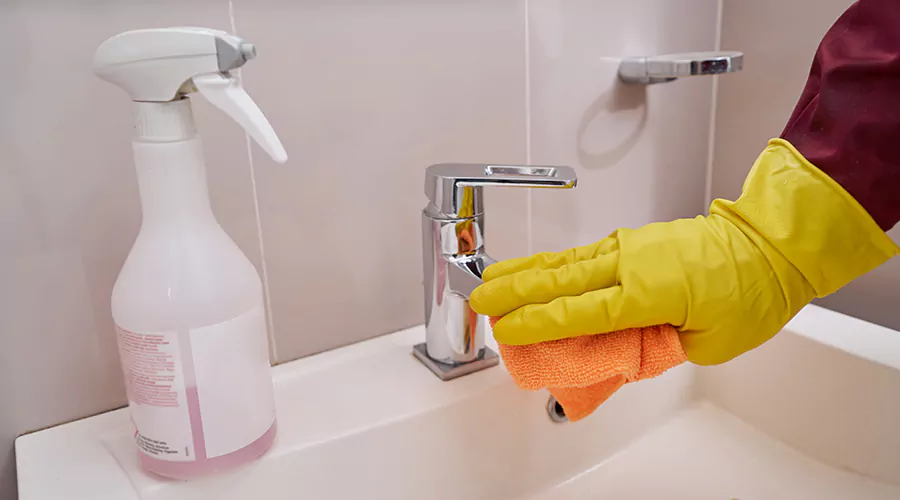
The best way to clean brushed nickel faucets is warm water with a drop of dish soap on a microfiber cloth. The routine costs pennies and takes two minutes. Harsh products cost far more because cleaners containing bleach or ammonia can leave dark marks and ultimately ruin the finish.
Brushed nickel faucet cleaning is a gentleness game rather than a chemistry game. The finish hides fingerprints beautifully and punishes aggressive products permanently. If the faucet has a leak, loose handle, or other issue, faucet repair can address the problem without damaging the finish.
The full method takes one section below. The rest of this guide covers hard water and the products to ban forever.
Why Brushed Nickel Demands Gentle Cleaning?
The brushed texture is a set of fine directional lines cut into a thin nickel layer. Those micro-grooves scatter light for the matte look and also trap minerals and soap film. Abrasives erase the lines while chemicals stain the metal.
Dullness arrives by accumulation. The finish looks dull over time because of mineral deposits and soap scum accumulation and hard water stains. None of that is damage yet. The damage happens during cleaning when the wrong pad or spray meets the surface.
One habit protects everything. Test any new cleaner on a small hidden area first such as the back of the base.
Insider tip: Always wipe with the grain rather than in circles on heavily textured finishes. The lines hide micro-scratches that cross-grain scrubbing creates.
The Soap and Water Method
The best cleaner for brushed nickel faucets already sits at your sink. Mild dish soap in warm water removes grime and fingerprints without harming the finish. Here's how to clean brushed nickel faucets in five steps:
- Mix the solution: Add a few drops of dish soap in a bowl of warm water.
- Dampen the cloth: Dip a microfiber cloth and squeeze until damp but not dripping.
- Wipe gently: Move in smooth motions and focus on the head, handles and base where grime collects.
- Detail the crevice: A soft-bristled toothbrush dipped in the soapy water reaches the tight spots.
- Rinse and dry: Rinse away all residue to prevent streaking and dry with a soft cloth until no moisture remains.
Frequency beats intensity. A weekly soap wipe keeps the finish ahead of buildup so the deep-clean methods below stay rare.
Hard Water Stains and the Vinegar Question
Mineral crust needs mild acid and here the advice splits honestly. Knowing how to clean hard water stains off brushed nickel means knowing the vinegar debate. Many sources endorse diluted vinegar while some finish makers warn against it.
The mainstream method works like this. To get hard water stains off brushed nickel, spray a soft cloth with a 50-50 vinegar and water dilution and wipe the stained areas, then rinse with a clean damp cloth and dry the finish completely. Keep contact short since minutes matter more than strength. Manufacturers commonly recommend the diluted mix which keeps it warranty-safe in most cases.
The dissent deserves airtime. Some finish guides advise avoiding vinegar on brushed nickel entirely along with acid, alcohol and solvent cleaners. Split the difference safely: check your faucet brand's care page first and test a hidden spot always. For crust that survives diluted vinegar, a baking soda paste applied briefly and scrubbed with a soft toothbrush works as the non-acid alternative.
Insider tip: Never let any acid dwell on the finish while you answer the phone. Set a two-minute timer the moment vinegar touches nickel.
Daily Water Spots
Spots are dried mineral droplets and speed is the whole cure. The answer to how to clean water spots off brushed nickel is catching them before they bond. Fresh spots wipe away dry while old spots need the vinegar section.
Timing sorts the technique. For same-day marks the answer to how to clean water spots off brushed nickel faucet finishes is a dry microfiber buff with the grain. For week-old marks the way to get water spots off brushed nickel faucet surfaces is a damp soap wipe followed immediately by full drying.
The prevention version costs ten seconds. Wipe the faucet dry after every use and the spots simply never form. A folded microfiber cloth living beside the faucet turns the habit automatic.
Products That Ruin the Finish
Seven product types damage brushed nickel faster than they clean it. Every one appears in a typical cleaning cabinet. Check yours against the list today.
- Abrasive cleaning pads and steel wool of any grade.
- Bleach-based cleaners.
- Ammonia glass cleaners.
- Alcohol-based sprays.
- Scouring powders and gritty pastes.
- Anything labeled all-purpose bathroom cleaner since those usually contain ammonia or bleach.
- Polishes made for other metals.
Brand guidance backs the list since Delta specifically warns against certain foaming bathroom sprays on its finishes. When a label lists none of the banned ingredients the hidden-spot test still goes first.
Polished and Plated Nickel Variants
Not all nickel wears the brushed texture and the rules shift with the surface. The guidance for how to clean nickel faucets tightens on polished versions because mirror finishes show every micro-scratch the matte texture hides. Same products with even lighter pressure.
Plating thickness sets the ceiling. Learning how to clean nickel plated faucets means accepting that the nickel layer is thin, so a scratch or chemical burn goes through to the base metal with no buffing remedy. Vintage plated fixtures deserve the gentlest tier of everything in this guide.
Solid living-finish nickel behaves differently again since it patinas on purpose. Owners of unlacquered fixtures should follow the maker's care sheet rather than any general guide.
Cleaning Every Brushed Nickel Fixture
The faucet method scales across the whole bathroom. The approach for how to clean brushed nickel fixtures extends to towel bars and shower trim and cabinet pulls unchanged. One bowl of soapy water services the entire room.
Two spots need extra attention. Shower trim collects soap scum thicker than any faucet so it earns the toothbrush detail more often. Door hardware collects skin oils, and a vinegar wipe handles light dust while oily hand residue needs the soap solution.
The long-term philosophy stays short. Everything about how to care for brushed nickel fixtures reduces to two words: gentle and dry. Products stay mild and surfaces never air-dry.How to Keep Brushed Nickel Faucets Clean?
Prevention costs one minute a day against an afternoon of stain removal. Three habits keep the finish permanently ahead of buildup. The wax step is the one most owners have never heard of.
- Dry after every use: The ten-second wipe prevents the spots and the stains and most of this article.
- Soap weekly and deep-clean monthly: A weekly mild wash with a monthly deep clean matches most households' water hardness.
- Wax monthly: Spread a layer of paste wax in small circular motions and buff it out with a fresh cloth, since paste wax is gentle on brushed nickel finishes and makes water bead off instead of spotting.
Technology helps at purchase time too. Some faucet lines carry spot-resistant coatings that prevent water spots and keep the finish cleaner longer which is worth the small premium in hard-water regions.
Insider tip: Hard-water homes can shrink this whole chore at the source. A water softener protects every fixture in the house at once.
When the Finish Is Beyond Cleaning?
Dark chemical stains and worn-through patches don't clean off because they aren't dirt. A bleach mark is chemically altered nickel and no product reverses it. Knowing the difference saves hours of futile scrubbing.
Run the fingernail and light test. Buildup sits on top of the finish and catches a fingernail edge while damage sits in the finish and feels smooth. Under raking light, buildup looks chalky while damage looks like a shadow in the metal.
Options narrow at that point. Professional refinishing exists for severe discoloration, though it's rare for household fixtures. Most owners replace the fixture and start the prevention habits on day one of the new one.
Conclusion
Dish soap and a microfiber cloth outperform every specialty product on brushed nickel. Diluted vinegar handles the mineral crust with short contact and a manufacturer check first. Bleach and ammonia and abrasives are the only real enemies the finish has. This week, park a dry microfiber cloth beside your most-used faucet. That ten-second habit permanently replaces most of this article.
FAQs
How do you clean brushed-nickel faucets daily without using products?
A dry microfiber wipe after the last use of the day. Moisture removal is the entire daily routine.
Can I use a magic eraser on brushed nickel?
No. Melamine sponges are micro-abrasives and they polish shiny patches into the matte texture.
Why did my faucet get dark spots after cleaning?
The cleaner likely contained bleach or ammonia. Those marks are finish damage rather than residue.
Is toothpaste safe for polishing nickel?
No. Most toothpaste is mildly abrasive which makes it exactly wrong for a brushed texture.
Does brushed nickel rust?
The nickel layer doesn't. Neglected damage that exposes the base metal underneath can corrode at the wear point.
How often should I wax the finish?
Once a month with paste wax in humid or hard-water bathrooms. Quarterly suffices in dry climates.